Silicone sealants are widely used in both household and industrial settings due to their flexibility and water resistance. SANVO produces a range of high-quality sealants designed to meet diverse construction and repair needs. However, one common question arises when applying silicone in real-world conditions: moisture. Understanding the limits and proper methods for applying silicone can prevent failures and ensure long-lasting performance.
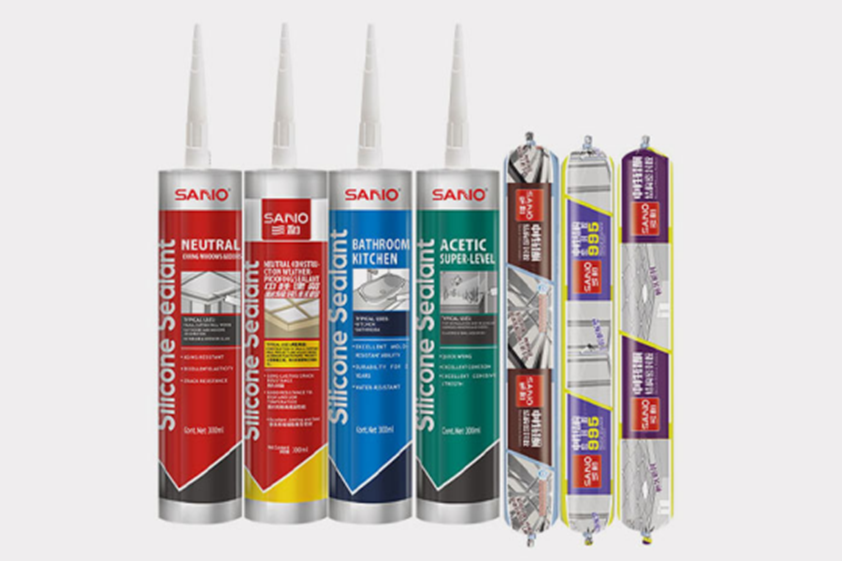
Moisture Challenges for Silicone
When surfaces are damp or wet, the adhesion of silicone sealants can be compromised. Professionals often ask, “Can silicone be applied to wet surfaces?”, as applying directly on moisture without preparation may result in poor bonding or delayed curing. SANVO emphasizes that cleaning and lightly drying surfaces, or using specialized formulations, can enhance adhesion and maintain seal integrity in challenging conditions.
Techniques for Effective Application
Before applying silicone sealant, it is essential to thoroughly clean the working surface to remove dirt, grease, or any other contaminants. The area should be kept completely dry to ensure strong adhesion, as many people ask, “Can you apply silicone on wet surface?” The answer is no—moisture prevents proper bonding and weakens the seal. Old caulk or loose material must also be carefully removed to create a smooth base. To achieve neat, straight lines and avoid spreading, masking tape can be placed along both sides of the seam. Once prepared, load the silicone sealant into a caulking gun and apply steady pressure while dragging the nozzle along the joint to form an even bead. After application, allow sufficient curing time—generally tack-free within 12 minutes and fully cured within 48 hours—for the sealant to perform effectively.
Conclusion
In conclusion, while silicone sealants provide durable and flexible protection, applying them on wet surfaces should be avoided, as moisture interferes with bonding and leads to weak adhesion. This can cause gaps or leaks and shorten the lifespan of the seal. To ensure long-term performance, always apply silicone only on clean, dry surfaces and allow full curing. Following these practices ensures the sealant delivers reliable results across different applications.