Sceye HAPS Specifications That Include Payload, Endurance And Battery Breakthroughs
1. Specifications provide you with the details of what A Platform Really Can Do
There’s a tendency within the HAPS industry to focus on ambitions instead of engineering. Press releases provide coverage areas, partnership agreements, and commercial timelines, but the more difficult and more insightful discussion is about specifications, how much the vehicle actually weighs as well as how long it remains up, and what energy systems make continuous operation possible. Anyone who wants to know the possibility of a stratospheric technology being actually mission-ready or in the promising-prototype phase, performance of the payload, endurance measurements and battery power are where the actual substance lives. Vague commitments to “long endurance” and “significant payload” are a given. Delivering both at the same time in stratospheric height is the engineering challenge that distinguishes reliable programs from bold statements.
2. The Lighter-than-Air Architecture Modifies the Payload Equation
The primary reason that Sceye’s airship design can carry meaningful payload is due to buoyancy handling the basic task that keeps the vehicle moving. This is not a trivial difference. Fixed-wing solar vehicles must create aerodynamic lift constantly this consumes energy, and puts structural constraints on the vehicle that limit the quantity of mass a vehicle can transport. Airships that are floating in the stratosphere does not expend energy fighting gravity in the same manner, therefore the energy produced by its solar array as well as the structural power of the vehicle, can be devoted to propulsion, station keeping and the operation of the payload. This results in an ability to payload that fixed-wing HAPS designs can achieve at a similar endurance can’t even come close to matching.
3. Capacity for Payloads Determines Mission Versatility
The value of a greater payload capacity becomes clear when you consider what stratospheric operations actually demand. A payload in telecommunications – antenna systems as well as signal processing hardware beamforming equipment — has significant weight and volume. So does a greenhouse gas monitoring suite. The same goes for a wildfire detection and earth observation sensors package. The execution of any of these missions adequately needs hardware with a mass. The simultaneous running of multiple missions requires more. The airship specifications of Sceye are built in the belief that a stratospheric structure should be able to carry a genuinely useful combination of payloads rather as forcing operators to pick between observation and connectivity because the vehicle cannot handle both simultaneously.
4. Endurance Is Where Stratospheric Missions Can Win or Lose
A platform that can reach high altitude for at least up to 48 hours prior to needing to descend is helpful for demonstrations. A platform which can stay in position over a period of months or weeks during the course of the development of commercial services. The distinction between those two outcomes is an energy matter — specifically, if the vehicle is able to produce enough solar power during daylight to operate all systems and charge the batteries sufficiently to allow full function through the night. Sceye endurance targets are based around this diurnal challenge by treating the need for overnight energy is not a target for a stretch however as a primary requirements for design that everything else is designed around.
5. They are a genuine Step of Change
The battery chemistry that powers traditional consumer electronics and electric vehicles -mainly lithium-ion possesses densities that result in limitations for stratospheric endurance applications. Every kilogram of battery mass that you carry is not a kilo to payload, however you’ll require enough stored energy to keep a large platform operating throughout a massive night. The chemistry of lithium-sulfur batteries alters this equation dramatically. With energy densities that can reach 425 Wh/kg, lithium-sulfur cells can store a lot more energy per pound than comparable lithium-ion cells. For a vehicle weighing a lot, in which every grams of battery mass represents potential costs in payload capacity, that rise in energy density isn’t simply incremental but is actually architecturally significant.
6. New advances in the efficiency of solar cells are the other half of the Energy story
The battery’s energy density determines how much energy you can store. The efficiency of solar cells defines how quickly you will be able to replenish it. Both are important, and advancement within one without improvement in both creates a negative energy structure. Improved photovoltaic cells with high efficiency — such as multi-junction designs which can absorb a wider range of solar energy, compared to traditional silicon cells — are significantly improving the amount of energy available to solar-powered HAPS vehicles at all hours. Combined with lithium-sulfur storage, this technology makes the closed power loop possible by generating and storage enough energy per day for all devices to operate indefinitely with no input from outside energy sources.
7. Station-Keeping Draws Constantly From the Energy Budget
It’s easy to view endurance solely as being in the air, but for the stratospheric platforms, staying in air is only one component of the equation for energy. station keeping — keeping the position in front of stratospheric winds with continuous propulsion consumes power continuously and makes up major proportion of energy use. The energy budget needs to handle station keeping, payload operation, avionics, communications, and thermal management systems simultaneously. This is the reason why specifications that provide endurance figures without describing what systems are operating within that time frame are difficult to evaluate. Truly accurate endurance estimates assume full operational load, not just a just a minimally configured vehicle, with payloads off.
8. The Diurnal Cycle is the Design Constraint from which Everything else Comes from
Stratospheric engineers focus on the diurnal cycle — the day-to-day rhythm of solar energy supplyas the fundamental element around which platform design is designed. When it is daylight the solar array must generate enough energy to power every system and charge the batteries to their capacity. When night falls, the batteries should be able to support all systems until sunrise without the platform falling off its position, deteriorating its payload’s performance, or going into any type of reduced-capability mode that could disrupt a continuous monitoring or connectivity mission. In the design of a vehicle to thread the needle in a consistent manner for day after day, for months at a stretch is the main engineering problem of solar-powered HAPS development. Every decision in the specification such as solar array size and battery chemistry, propulsion effectiveness, payload power draw -feeds into this main constraint.
9. It is the New Mexico Development Environment Suits This Kind of Engineering
Making and testing a soaring airship requires infrastructure, airspace, and atmospheric conditions not available everywhere. Our base at New Mexico provides high-altitude launch and recovery capabilities, clean blue skies suitable for conducting solar experiments, also access to type of unrestricted, uninterrupted airspace continuous flight testing requires. As a company in the aerospace industry of New Mexico, Sceye occupies an exceptional position, focused on stratospheric lighter-than-air devices rather than the rocket launch programmes more commonly found in the area. The rigor of engineering required to confirm endurance claims and battery performance under actual stratospheric conditions is precisely the kind of work that benefits from a specific test environment instead of sporadic flight missions elsewhere.
10. Specifications that stand up to the scrutiny of commercial Partners Need
In the end, the main reason that requirements are not just about technical relevance is that partners from the commercial sector making investment decisions must ensure that the numbers are accurate. SoftBank’s promise to build a nationwide HAPS service in Japan as well as a pre-commercial network by 2026, is based on the assurance that Sceye’s system will function as expected under actual conditions and not just during controlled tests, but throughout the mission durations that a commercial network requires. Payload capacity, which can last when equipped with a full telecommunications system and observation suite aboard endurance figures verified through real-world operations, and battery performance that is demonstrated over real diurnal cycles is what will transform the potential of an aerospace program into a telecoms infrastructure that a major operator is willing to stake its plans for network expansion on. Check out the best Sceye Softbank for more examples including what are the haps, sceye haps project, Sceye Inc, sceye connectivity solutions, whats haps, sceye haps softbank, Stratospheric telecom antenna, what does haps, sceye haps airship payload capacity, Stratosphere vs Satellite and more.
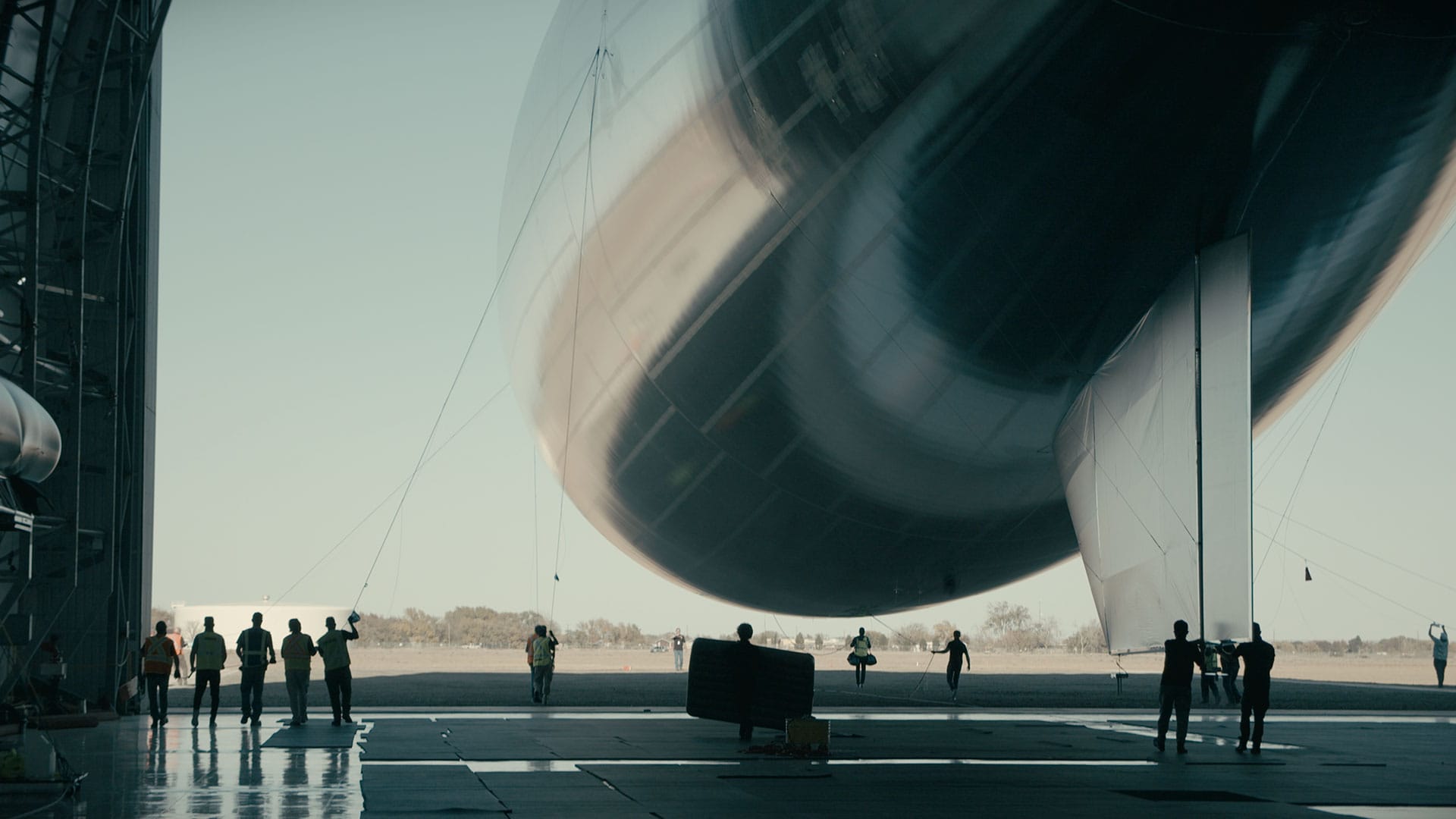
SoftBank’S Pre-Commercial Haps Services What’s To Come In 2026?
1. Pre-Commercial is an incredibly specific important and significant milestone
The terms used in this case are important. Precommercial services have an entirely distinct stage in the development of any new communications infrastructure — above experimental demonstration, beyond proof-of-concept flight campaigns, and in the areas where real users enjoy real-time services under conditions that mimic what a fully commercial deployment might be. This means that the platform is operationally stable, the signal is in line with quality thresholds that actual applications depend on and the ground infrastructure interfaces with the spheric radio antenna effectively, and the necessary regulatory clearances are in place to operate in areas of dense population. Achieving pre-commercial status isn’t something that is a marketing goal. It’s an operational one, being that SoftBank has announced its intention to the goal at Japan in 2026, sets an objective that the engineering both sides of the partnership has the ability to clear.
2. Japan is the most appropriate country to Attempt This First
The choice of Japan as the place to launch commercial services that are stratospheric isn’t an accident. Japan has a variety of characteristics that make it close to perfect for a first deployment area. The terrain- mountainous terrain as well as thousands of inhabited islands and long and complex coastlines — present real problems with coverage that stratospheric infrastructure is designed to deal with. Its regulatory environment is sophisticated enough to handle the spectrum and airspace issues that stratospheric operations pose. Its existing mobile network infrastructure operated by SoftBank, provides the integration layer that the HAPS platform will need to connect to. Its population also has the device ecosystem as well as the digital literacy required to access stratospheric broadband services without needing an extended period of technological adoption that would hinder meaningful growth.
3. Expect Initial Coverage To Focus on under-served areas and Strategically Important Areas
Pre-commercial deployments aren’t designed to provide coverage across the entire country at once. The more likely pattern is an individualized rollout that targets areas in which the gap between current coverage and what stratospheric connection can provide is the largest and where the argument for prioritizing coverage is most compelling. In Japan’s context, this includes island communities currently dependent on high-cost and inadequate Satellite connectivity. Also consider mountainous rural areas that have terrestrial network economics that have failed to provide adequate infrastructure, as well as coastal areas where disaster resilience is a national goal due to the country’s typhoon and seismic risk. These areas offer the most clear evidence of stratospheric connectivity’s benefits and also the most important operational information to improve coverage, capacity, and platform management prior to the broader rollout.
4. The HIBS Standard Is What Makes Device Compatibility Possible
One of questions that one could reasonably ask about stratospheric connectivity can be if it is required special receivers or can be used with regular devices. This HIBS Framework — High-Altitude IMT Base Station — is the standards-based answer to that question. Through its conformance to IMT standards, which support 5G and four-G networks around the world, the stratospheric platform functioning as a HIBS is compatible with the smartphone and device ecosystem that exists within the area of coverage. SoftBank’s pre-commercial offerings, those who subscribe to the areas of coverage should be able to connect to stratospheric networks using their devices, without the need for additional hardware — a critical prerequisite for any service that hopes to reach the masses of the remote regions who need alternatives to connectivity and are unable to afford the expensive equipment.
5. Beamforming is the process that determines how capacity is distributed
A stratospheric based platform covering a vast area won’t offer a consistent amount of capacity over the whole area. The way that spectrum and energy available to signal is distributed to cover the whole area is dependent on beamforming capability — the ability of the platform of directing signal the regions where demand for services and users are centered, instead of broadcasting all over the vast areas of land that aren’t being used. For SoftBank’s pre-commercial phase, demonstrating that beamforming using an extremely high-frequency telecom antenna can give commercially sufficient capacity to certain areas of a vast coverage area will be vital as is demonstrating the coverage area. A wide footprint with small, unusable capacity will prove little. Targeted delivery of genuinely suitable broadband to services proves the viability of the model.
6. 5G Backhaul Applications May Precede Direct-to-Device Services
In certain scenarios of deployment, one of the earliest and most simple ways to establish the reliability of stratospheric connectivity isn’t direct connectivity to consumers, but 5G backhaul which connects existing ground infrastructure in regions where terrestrial backhaul is inadequate or absent. A remote region may have one or two ground-level network components, but do not have the capacity connection to the greater network that can be useful. A stratospheric platform that provides the backhaul link gives functional 5G coverage to communities served by existing ground equipment, without the requirement for end users to engage with the stratospheric platform directly. This application is simpler for engineers to evaluate technically, and provides clear and measurable value, and gives operational confidence to service performance before a more complex direct-to device service layer is added.
7. Skeye’s 2025 Platform Success sets the stage for what’s possible in 2026.
The timing of the first commercial services planned for 2026 will be determined by the performance happens when the Sceye HAPS airship achieves operationally in 2025. Payload performance, station-keeping validation under real weather conditions, the behavior of the energy system across a variety of diurnal cycles, as well as the integration testing needed to prove it is working to SoftBank’s network architecture require maturity before commercial services can be launched. Updates on Sceye HAPS airship status from 2025 are therefore not peripheral informational items, they provide the best indicators of whether the 2026 milestone is tracking in line or is accumulating the kind or technical debt that pushes commercial timelines into the future. The technological progress that will be made in 2025 will determine the 2026 story being constructed in advance.
8. Disaster Resilience will be A Tested Capability, Not just a Claim One
Japan’s exposure to natural disasters mean that any pre-commercial stratospheric services operating over the country will almost always encounter circumstances — such as earthquakes, typhoons and disruptions to infrastructure — that make the platform more resilient and its utility as an emergency communications infrastructure. It’s not a limitation of the application context. It is a single of its most beneficial features. An stratospheric-based platform that runs a station as well as providing connection and observation capabilities in the event of major weather or seismic event in Japan provides a proof point that no test controlled by a lab can reproduce. The SoftBank Pre-commercial phase will create real-world evidence regarding how the stratospheric infrastructure works in the event of a disruption to terrestrial networks — exactly the kind of evidence that any other potential operators in catastrophe-prone countries need to study before they commit to their own deployments.
9. The Wider HAPS Investment Landscape Will Respond to What happens in Japan
The HAPS field has seen significant investments from SoftBank and others, but the entire telecoms and investment community is in an active watch. Large institutional investors, national telecoms operators in different countries and governments looking into stratospheric infrastructure for their own protection and monitoring needs are all tracking what happens in Japan with great interest. The successful implementation of pre-commercial platforms -platforms on station functional, services running, performance metrics that meet thresholdscan accelerate investment decisions across the industry with a speed that ongoing pilot flights, and announcements of partnerships are not able to. However, any significant delays or shortfalls in performance will lead to revisions to timelines across the industry. The Japan deployment is extremely significant over the entire stratospheric communications sector, not just for this particular Sceye SoftBank partnership specifically.
10. 2026 is the year we will know if Stratospheric Connectivity Has Crossed the Line
There’s an arc in the development of any new infrastructure technology from the point where it’s promising to the time when it’s fully realized. Mobile networks and the internet infrastructure all crossed that line at specific times -they did not occur when technological breakthroughs were initially tested but rather when it was beginning to function reliably that institutions and people began planning around its existence rather then its potential. SoftBank’s preliminary commercial HAPS products in Japan are the most reliable possible scenario for the future when the stratospheric Internet crosses that line. If the platforms will be able to support stations through Japanese winters, whether beamforming service is sufficient for island communities, and whether the service can withstand the types of conditions Japan often encounters, will determine whether 2026 is remembered as the year when stratospheric internet became real infrastructure or as the year when the timeline was re-set. Have a look at the recommended HAPS investment news for more tips including Sceye Softbank, Sceye endurance, softbank haps pre-commercial services 2026 japan, what is a haps, sceye aerospace, sceye earth observation, whats haps, sceye haps softbank japan 2026, what haps, Sceye stratospheric platforms and more.